Fox Sues Aereo Competitor With Gag Name ⇒
Fox’s suit, filed in U.S. District Court in Los Angeles on Friday, charges that Barrydriller.com violates its right of public performance by streaming the signal of its Los Angeles affiliate, KTTV, to subscribers without authorization.
I can’t decide if I love or hate these guys for giving their dubious service a joke name.1 Can I do both?
-
Barry Diller is the most prominent investor in Aereo, which paved the way for Barrydriller.com to stream over-the-air broadcasts. ↩︎
Stats vs. Story ⇒
YouTube lifts its skirt a bit on how a video gets to be considered popular over on its Creator Blog:
The best thing creators can do to be successful on YouTube is make videos that people want to watch. Simple, isn’t it? Unfortunately, many of the tactics we’ve heard from creators to optimize for YouTube’s discovery features may in fact backfire.
Tactics?
For example, we’ve heard from some creators who intentionally made their videos shorter in an attempt to get a higher retention rate. Unfortunately, this won’t help. While high retention on your videos is a good indication of engagement, we are actually optimizing for how a video contributes to a longer viewing session on YouTube. So your video isn’t more likely to be seen just because it’s shorter.
Well duh, try the opposite.
Conversely, we’ve also heard from some creators who intentionally made their videos longer, assuming that longer videos lead to more watch time. This also isn’t necessarily true, because it can be more challenging to keep viewers engaged through a longer video.
Once upon a time, these kinds of numbers were the business of studio or network executives who would use them to breathe down the necks of creatives. Now they’re the bread and butter of “creators.”
Bullshit.
I often wonder why Vimeo has better content than YouTube even though the latter has the vastly bigger audience. My guess is that YouTube creators want stats; Vimeo filmmakers want to share a story.
Make better content. Screw the numbers.
Still Here, But Over Here
Since my last post I drove halfway across the country to my new home in Austin, Texas. Internet gets installed on Monday and my furniture is on a truck somewhere in the US. Next week the candler blog should return to its regularly scheduled programming.
Super Hi-Vision Olympics ⇒
John Zubrzycki over at the BBC Research and Development Blog has a nice piece on how, with the help of Japan’s NHK, the Olympic opening ceremony was shown to a select few in Super Hi-Vision (SHV), a video technology that makes HD look like SD and SD look like grease stains on a highway:
The SHV content has 16 times the data of HDTV, so rendering and processing time is slow, even using very powerful workstations. Even so, the NHK production team and a BBC editor are able to edit a new content package overnight ready for showing the next day.
Oh, did I forget to mention this part:
SHV has sixteen times as many pixels as HDTV making a picture with 7680 pixels across by 4320 pixels down. It was displayed on an 8-metre wide screen, accompanied by a 22.2 multichannel 3-dimensional sound system.
Yes, please.
(via James Thomson.)
About Streaming Competition
Fast Company’s Austin Carr reporting on a joint venture from Verizon and Redbox on Tuesday:
The service will be launched in internal alpha testing today, followed by a beta program in the coming months before the streaming service goes live later this year. It will be branded Redbox Instant by Verizon; it will combine access to physical and digital content; and the [joint venture] will be led by newly appointed CEO Shawn Strickland, who previously worked as a vice president in Verizon’s FiOS business. Such a set up indicates the partnership will rely mostly on Redbox’s branding, which mimics competitors Netflix Instant and Amazon Instant, while taking advantage of Verizon’s network infrastructure.
Doug Stephen, commenting on the news:
More players and more popularity also means more pressure on content providers to adopt alternative distribution. These are all great things for consumers.
Competition is good for consumers, but I don’t think streaming is necessarily where we need more competition. In his excellent book, Pandora’s Digital Box, David Bordwell makes a compelling argument that the film industry is run as an oligopoly, with the studios and major theater chains acting as rulers. For some time, the theater chains were even able to stifle streaming so as not to eat into their business model. Things are changing, but slowly.
It seems to me that we now have a preponderance of streaming services to choose from which yields mostly trepidation over which horse to bet on. Yes, in some cases these services compete on price and everybody wins with lower bills or better features. However, for the most part streaming services compete for exclusive content. All of a sudden we end up with two, three, four services we need to keep paying for every month.
Competition needs to happen at the top. Filmmakers and distributors need to challenge the studio system and get work out there that isn’t tied up in the awkward gerrymandering of streaming exclusivity. We can already stream six ways to Sunday, but if we really want to move into the future, we need to challenge those who make the films. That competition would be better for consumers.
Video Free Brooklyn for Turnstyle ⇒
I interviewed my pal Aaron Hillis about his new venture: a brick and mortar video rental store.
Though Aaron didn’t give the store its call-to-arms name, he is clearly running with it as a theme. Video Free Brooklyn, in other words, feels like more than a store; it feels like a cause. “In comparison to Video Free Brooklyn, Netflix offers a sterile, impersonal and flat-out incomplete experience,” Hillis told me, speaking about his biggest competitor. The video store is meant to bring a certain sense of surprise, of curation and even whimsy back to the process of deciding, “What are we going to watch tonight?”
There’s a bit over a day left on his Indiegogo campaign. If you live near Cobble Hill, you’re definitely going to want to give at a level that yields some rentals.
Sparrow, Google and Mail
Yesterday, Google acquired Sparrow, an excellent Mac and iOS email client that I have been using for months. The Verge later confirmed that the team does “not plan to release new features for the Sparrow apps.” As someone who was eagerly awaiting native push notifications for their iPhone app and the forthcoming Sparrow for iPad, I was a bit bummed1 to hear that my favorite mail client had effectively been shut down.
Today, Matt Gemmel posted a piece that breaks down the many wrong-headed reactions to the acquisition and offers a bit of perspective on the indie dev business:
Sparrow’s acquisition is a success story. Indie devs make a great product, build a customer-base, and are rewarded with a buy-out from a big company and they get new jobs with that company. It might not be what your particular goal or end-game is, but it is a success. I’m really happy for them.
I loved every word of his piece. Spot on, Matt.
But.
I have a very awkward relationship with Google. For the longest time I was convinced the company could do no wrong and that they were the company that made tools I want to use. That all took a nosedive around the time Eric Schmidt started saying weird things about privacy. And so I’ve long tried to unhinge myself from their products, finding that I always come back to them in the end for this reason or that. When it comes to Gmail, Sparrow has been part of the reason I have stuck around.
Sparrow is really a Gmail client that also supports vanilla IMAP and POP accounts. With Sparrow, I never really had to worry about the oddities that creep up when using Apple Mail with a Gmail account. Drafts would always be saved to the right place, labels worked the way I wanted them to and archiving messages actually archived them reliably. Now I need to go back to Apple Mail and figure out how to make things work properly.
The app’s tight integration with Gmail makes Google’s acquisition a no-brainer. Yet it gives me pause. Google may use the talent at Sparrow to change Gmail’s mobile apps, or perhaps they will use them to make the web interface better. I don’t know. What I do know is that Sparrow’s current apps will depreciate fast, so I need to switch email clients. And that makes me want to reconsider why I’m sticking with Gmail anyway.
For now, I have my reasons to keep Gmail, but I’m shopping around, if you have any suggestions.
-
I had bigger things to be bummed about yesterday. ↩︎
14 Dead in Shooting at Dark Knight Rises Midnight Screening ⇒
A gunman opened fire in a crowded movie theater in the Denver suburbs early Friday morning, killing at least 14 people and wounding dozens of others, the police told reporters in an early morning news conference. The shooting erupted during midnight showings of “The Dark Night Rises” at the multiplex in Aurora, Colo., where throngs had gathered, some dressed as characters from the highly anticipated Batman sequel.
I was nearly brought to tears reading this on my commute this morning.
Movie theaters are supposed to be holy places, where we can sit together in relative silence and be enterntained, educated or enlightened (or all three) for two hours or more. I don’t want to imagine a world in which people fear gathering publicly to enjoy something they love, but I don’t have to. For the people of Aurora, Colorado, that is now a horrific reality.
My heart goes out to the victims, their families, those wounded in the attack1 and those who witnessed it.
-
Reuters is reporting fifty wounded. ↩︎
The Quotable Kevin Smith
{::nomarkdown}
{:/nomarkdown}- “Less years in front of me than behind.” -00:57
- “There is no such thing as an abortion of cinema. Every fuckin’ movie counts.” -01:23
- “The high, to the low, every movie is someone’s favorite fuckin’ movie.” -1:31
- “The Unexamined life is not worth living. We’ve said that many times. Plato said that and I just re-said it.” -01:48
- “You could either sit around and be entertained, or you could go out and try to be entertaining.” -02:01
- “We live in the age of democratized media.” -03:02
- “In that world, where that’s at your fingertips, where you could be a god, you can create characters and life and shape shit.” -03:28
- “If you perceive deficit, fill that deficit yourself.” -04:06
- “That’s adding a spoke to the wheel and creating conversation, creating art.” -04:10
- “Put your dick on the table, play the game with the rest of us.” -04:51
- “Deeds, not words.” -05:02
- “That’s me voting with my wallet.” -05:43
- “There’s not enough money going around to fucking hand out free samples of the work just to have somebody shit in your mouth later on.” -05:52
- “Less years in front of me than behind.” -06:18
- “You have a parasitic existence.” -06:35
- “I can’t suffer fools gladly anymore.” -06:56
- “I’m taking a shit, I wanna read happy things.” -08:17
- “I don’t put out negativity, I don’t want negativity around me.” -08:57
- “Life’s too short, bitch, let’s go make some art.” -09:07
Dr. Phil better watch his back.
Also, Scott Weinberg nailed it.
Millennials and the Movies (And Get Off Neal Gabler's Lawn)
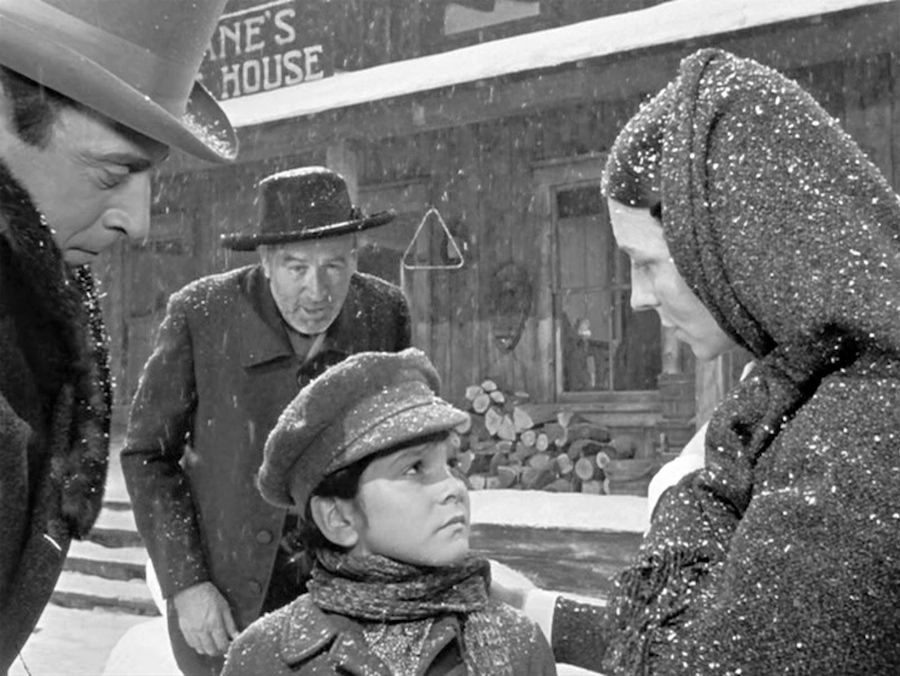
Still from Citizen Kane
Film’s death knell rings again, this time from the pen of Neal Gabler at the LA Times:1
Young people, so-called millennials, don’t seem to think of movies as art the way so many boomers did. They think of them as fashion, and like fashion, movies have to be new and cool to warrant attention.
And we’re off. Where’s the proof, Neal?
There are, unfortunately, no studies of which I am aware that examine the relationship of millennials to old movies.
Hmm…
At best we have dated surveys about the antipathy of young people to black-and-white films. But MTV did conduct a study recently of how young people relate to contemporary films, which found that movies are deeply embedded in the social networking process.
And later:
There is a sense that if you can’t tweet about it or post a comment about it on your Facebook wall, it has no value.
Wrong.
If Twitter and Facebook were around forty years ago, would baby boomers’ collective conversations have been any more insightful? I bet not. Lucky for Gabler, though, the only evidence of that laudable generation’s film experience comes from its greatest minds, in print.
Indeed, the most ardent movie enthusiasts of the past generation were reverential of old movies. Andrew Sarris, who died last month and who was among the nation’s most influential film critics in the ’70s and ’80s, made his reputation not just by importing the auteur theory from France that celebrated the authorial role of the director but by disinterring many of those old directors from film history.
Comparing all young peoples’ tweets to one of criticism’s greatest minds seems foolhardy, to say the least. But let’s hear what Gabler’s friends have to say.
Another friend who teaches at a prestigious university told me that while a good number of his self-selected class of undergraduates studying film history did respond to many of the old films he showed, for example Hitchcock movies, they expressed only cold admiration for many other classic films, including “Citizen Kane,” which they found antiquated.
As well they should. It is over seventy years old, after all.
And yet another friend, this one a high school teacher in California heading a film class, said his students were bored by “The Godfather.” He won’t be teaching the course again because there wasn’t sufficient interest.
I’ve taught film to students from elementary school age straight on up to college, and I can tell you firsthand that young people need to be fed something more interesting than an AFI-compiled boomer-stroking greatest hits list. Film education needs to grow and change, not rely on the same stale syllabi that worked once upon a time. When you meet them where they are, you will be surprised by how exhilarated young people are by movies, even old ones.
Contrary to Gabler, the classics are not sacrosanct. Film history and appreciation is much more interesting than the accepted good taste of a bygone few. Preservation and the auteur theory didn’t always exist and are, quite possibly, unique to the baby boomer generation.
I’m not suggesting that any of these elements of cinema culture be dismantled. Quite the opposite. In order for institutions like film education and preservation to survive, they must prove malleable enough to weather generational shifts. Otherwise Gabler’s greatest fears will come true, and future generations won’t know a wide shot from a hole in the ground.
Just because young people approach cinema differently than their parents and grandparents does not mean they’ve dissociated themselves from the art. If all you have to go on are social media posts and anecdotal yarns from colleagues who can’t keep a classroom interested, then yes, a very bleak picture of film’s state of affairs develops. But I like to think that there are more exciting things happening with young film goers and makers, even among those who can’t connect with Citizen Kane.
-
Via Roger Ebert. ↩︎